

The Story of the Thimble Through the Ages
Threads Through Time
Thimbles may seem like simple sewing tools, but their history tells a much richer story. These small finger protectors evolved from simple bronze implements into elaborate symbols of status and love. They’ve been carried in the sewing kits of emperors, tailors, pioneers and homemakers alike.
The word “thimble” comes from the Old English word “pymel”.
Han Dynasty China (206 BC – 220 AD)
The earliest known metal thimbles date back over 2,000 years to China’s Han Dynasty.
Roman Empire (1st Century AD)
Archaeologists discovered Roman thimbles in Pompeii during the 1st Century AD. They were made of bronze and had a simple design.
Medieval Europe (5th – 15th Century)
In medieval Europe, thimbles were often made of leather or simple brass. Handmade, these small tools remained modest and functional.
That said, thimbles were valuable enough to be passed down through generations, a small heirloom of sorts.
16th Century Nuremberg: The Thimble Goes Industrial
By the 1500s, Nuremberg became a centre for brass thimble production. Many bore the city’s hallmark stamp, a quality symbol known across Europe.
17th – 19th Century: Thimbles as Tokens & Treasures
By the 1600s and into the Victorian era, thimbles turned into more than sewing tools. Wealthy women owned silver and gold thimbles, and some were even decorated with tiny gemstones. They were sometimes given as signs of love or friendship, engraved with initials or romantic motifs. In some traditions, however, gifting a thimble to an unmarried woman was said to mean she would never marry—an ending as sharp as it was superstitious.
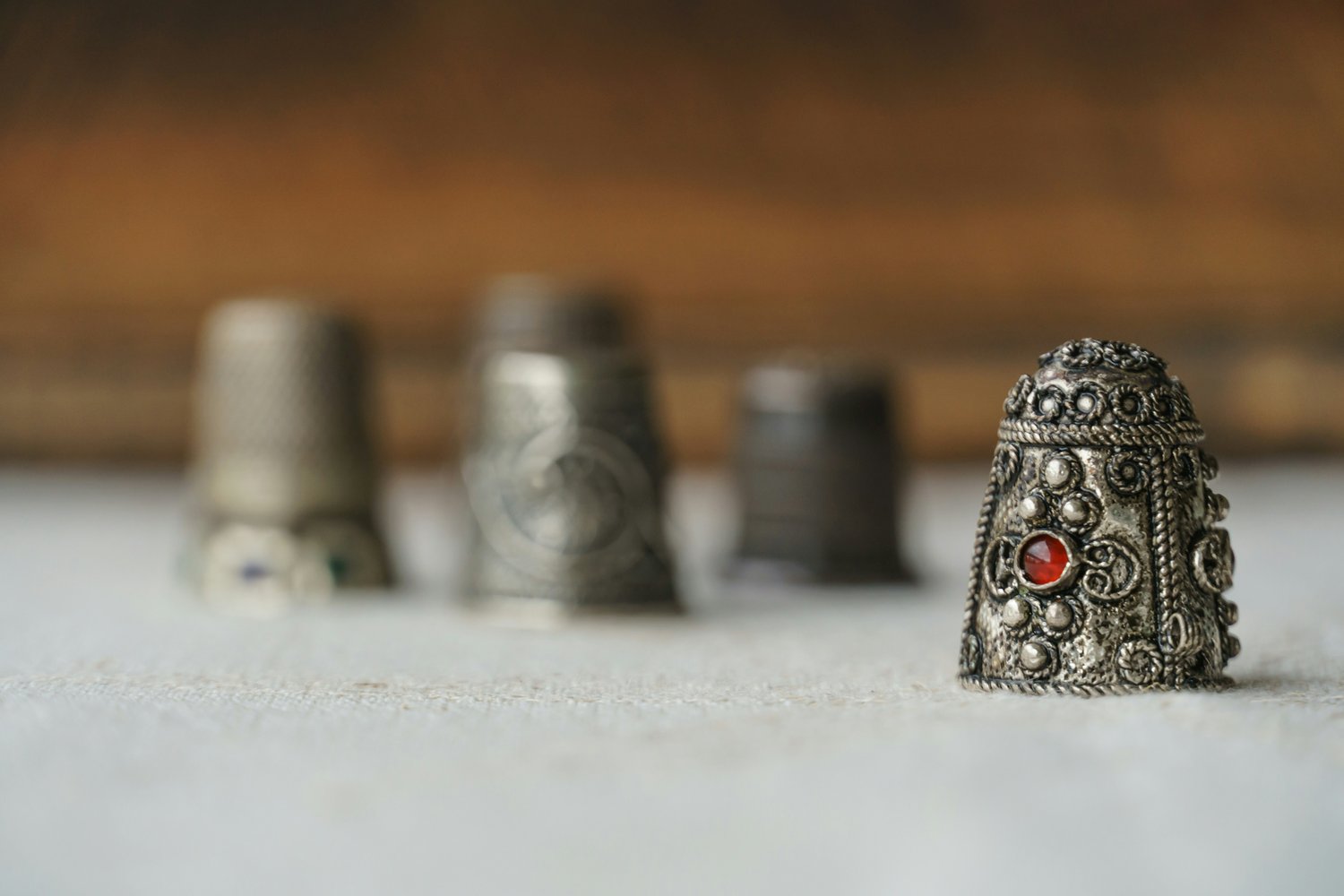
Photo by Carlos Felipe Ramírez Mesa on Unsplash
Thimble cases also became miniature works of art, carved from ivory or inlaid with mother-of-pearl. Thimbles had moved from workshop necessity to status symbol.
Colonial America (17th – 18th Century)
As European settlers made their way to the New World, so did their thimbles. These practical tools proved indispensable in frontier life, where mending and making clothes was part of survival. Some colonial thimbles were made of simple brass or iron, but wealthier households might still boast a silver example or two.
19th – 20th Century: Mass Production and the Domestic Ideal
With the Industrial Revolution, thimbles reached the masses. Factories in England and America churned out millions, often made from steel or aluminium. Thimbles became affordable, and nearly every household had at least one.
Dropping a thimble was once thought to mean you’d soon receive a letter or unexpected news.
By the 20th century, thimbles also made their way into pop culture; think of the thimble token in Monopoly (first appearing in 1935). It became a tiny symbol of domestic life.
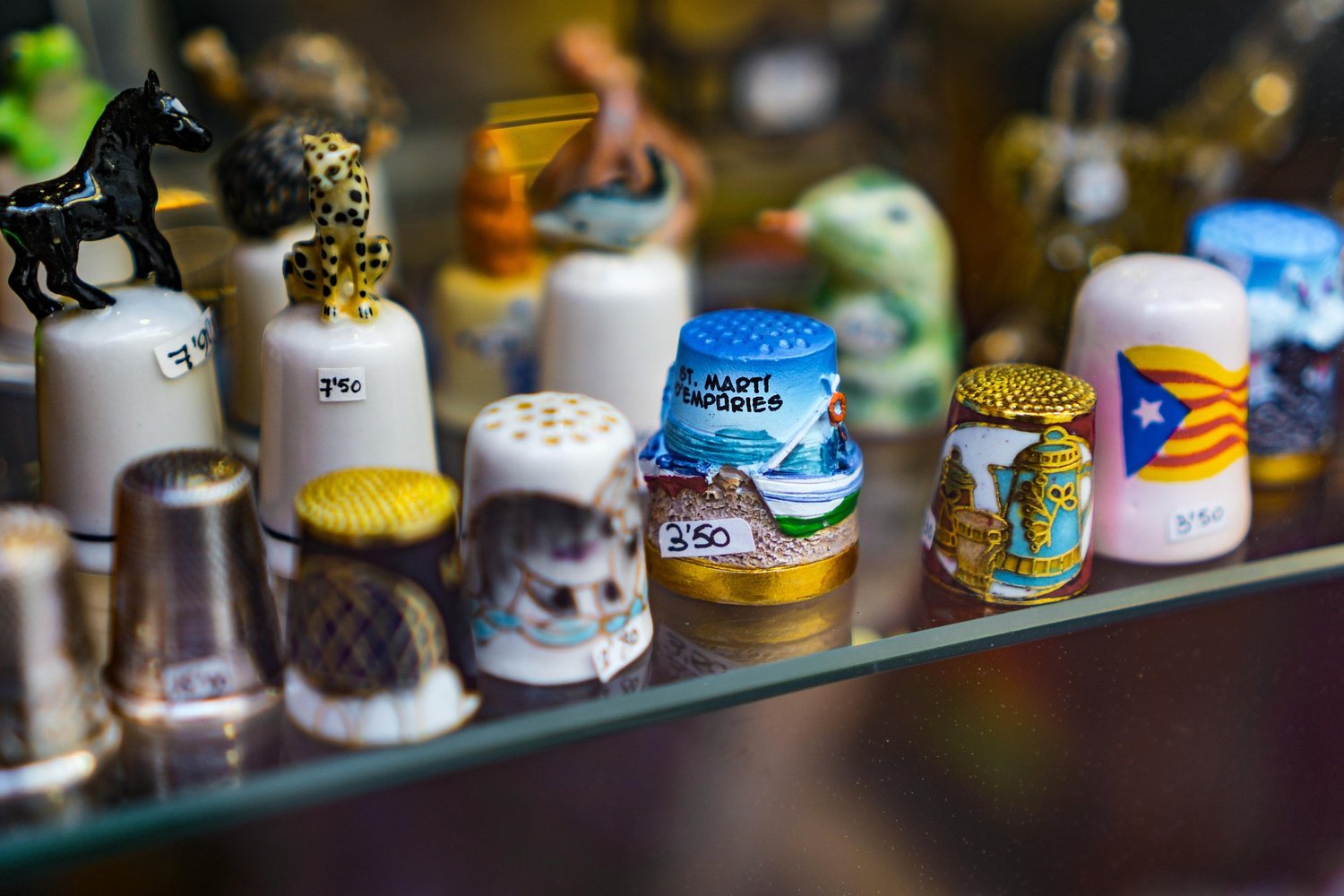
Today: From Everyday Tool to Collector’s Item
Many modern sewers use leather or synthetic finger guards instead of traditional thimbles, but they are still around.
Collectors of these treasures are known as digitabulists.
Conclusion
Whether you sew by hand today or admire the craftsmanship of the past, the thimble acts as a small but powerful link between generations of makers.
You might also enjoy
The Humble Needle, a Small Tool with a Remarkable History
Comments ()